Purr-fect Smiles: The Ultimate Guide to Improving Your Cat’s Dental Health Without the Drama
When we think about our cats, we often focus on their luxurious fur, their mysterious purrs, or their playful antics. However, beneath those feline lips lies a critical component of their overall well-being that is frequently overlooked: their teeth and gums. Veterinary statistics reveal a startling reality approximately 70% to 80% of cats show signs of oral disease by the age of three. This isn't just a matter of bad breath; dental disease in cats can lead to chronic pain, systemic infections, and even organ failure if bacteria from the mouth enter the bloodstream and travel to the heart or kidneys.
The challenge for most cat owners is the "drama." We’ve all been there trying to hold a wriggling, protesting feline while attempting to shove a toothbrush into a mouth full of needles. It’s stressful for the cat and often painful for the human. But what if feline dental care didn't have to be a battle? This comprehensive guide explores the science of feline oral health and provides a step-by-step, low-stress roadmap to ensuring your cat’s mouth stays healthy and pain-free without the theatrics.
Understanding the Feline Oral Landscape
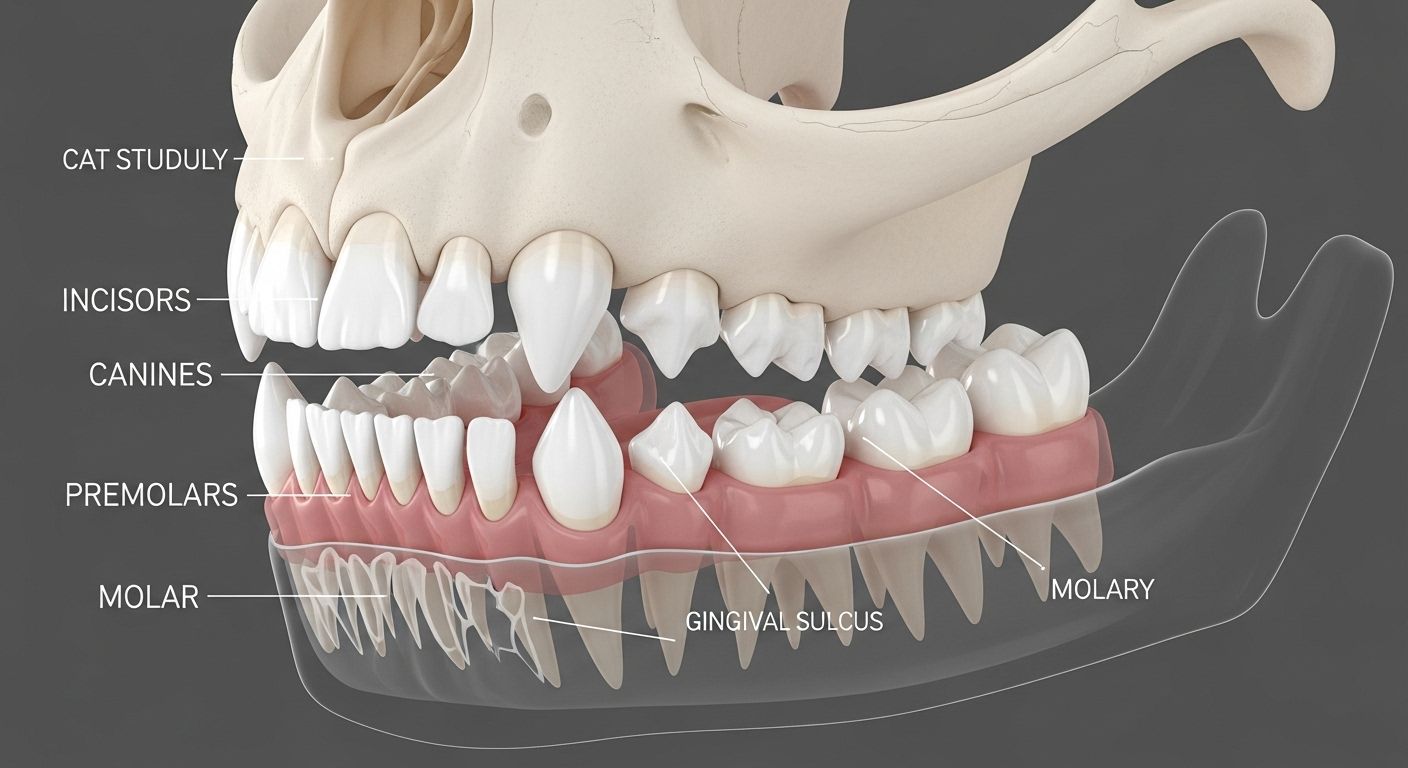
To effectively manage your cat’s dental health, you must first understand what you’re looking at. Cats are obligate carnivores, and their teeth are precision instruments designed for shearing meat rather than grinding plants. They have 30 adult teeth, including the prominent canines (the 'fangs') and the specialized carnassial teeth toward the back of the mouth, which act like scissors.
- Incisors: The tiny teeth at the front, used for grooming and delicate nipping.
- Canines: Used for grasping and puncturing.
- Premolars and Molars: Used for shearing and breaking down food.
The primary enemy of these structures is biofilm. Within hours of eating, a sticky film of bacteria begins to form on the teeth. If not removed, this film hardens into tartar (calculus) within 24 to 48 hours. Once tartar forms, it cannot be brushed away; it requires professional scaling. This tartar provides a porous surface where more bacteria can thrive, leading to gingivitis and, eventually, periodontal disease.
The Silent Pain: Recognizing Signs of Dental Distress
Cats are masters of disguise. In the wild, showing pain is a sign of weakness, so domestic cats have evolved to hide dental discomfort until it is almost unbearable. You might think your cat is just getting "fussy" with their food or "slowing down" with age, but these are often symptoms of oral pain. Halitosis (bad breath) is the most common early warning sign. While 'tuna breath' is normal, a truly foul, metallic, or rotting smell is a red flag for infection.
Other subtle signs include:
- Dropping food: If your cat picks up a piece of kibble and it falls out of their mouth repeatedly, they are likely experiencing pain when chewing.
- Pawing at the mouth: This is a clear sign of acute discomfort.
- Changes in grooming: A cat with a sore mouth may stop grooming themselves, leading to a matted or unkempt coat.
- Redness along the gum line: This is gingivitis, the first stage of periodontal disease.
- Hiding or irritability: Chronic pain can change a cat's personality entirely.
The Drama-Free Training Protocol: A 4-Week Roadmap
The secret to brushing a cat's teeth without the drama is desensitization. You cannot expect to go from zero to a full brushing session in one day. You must move at the cat's pace, using positive reinforcement (treats) at every stage.
Don't even touch the mouth yet. Simply let your cat lick a small amount of feline-specific toothpaste off your finger once a day. These pastes come in flavors like poultry, seafood, or malt. The goal is for the cat to view the toothpaste as a treat.
Once they love the paste, begin gently rubbing their upper gums with your finger while they lick the paste. Keep sessions under 10 seconds. Always follow up with their favorite high-value treat.
Introduce a soft finger brush or a piece of gauze wrapped around your finger. Let them sniff it and lick the paste off it. Gradually move to a gentle circular motion on the outside of the canines.
Aim to brush the outside of the molars and premolars. You don't need to brush the inside of the teeth (near the tongue) as the cat's tongue does a decent job of cleaning those surfaces naturally.
Beyond the Brush: Effective Alternatives
If your cat simply won't tolerate a brush, or if you want to augment your efforts, there are several "passive" dental health strategies. These methods work by either mechanically scrubbing the teeth or chemically inhibiting the formation of plaque.
1. Dental Diets and the VOHC Seal
Not all dry food is good for teeth. Most kibble is small and shatters easily, providing little mechanical cleaning. However, specific Prescription Dental Diets are formulated with a larger, fibrous kibble matrix. Instead of shattering, the tooth sinks into the kibble, which then scrubs the surface of the tooth like a squeegee. When shopping, look for the VOHC (Veterinary Oral Health Council) seal of approval, which ensures the product has been scientifically proven to reduce plaque and tartar.
2. Water Additives and Oral Gels
Water additives are the "lazy" way to improve dental health and they actually work. These solutions often contain enzymes or ingredients like zinc gluconate or chlorhexidine (in very low concentrations) that break down bacteria in the mouth. Simply add a capful to your cat's water bowl. Oral gels can also be applied to the gums; they don't require brushing as they spread through the cat's saliva.
The Gold Standard: Professional Veterinary Cleaning
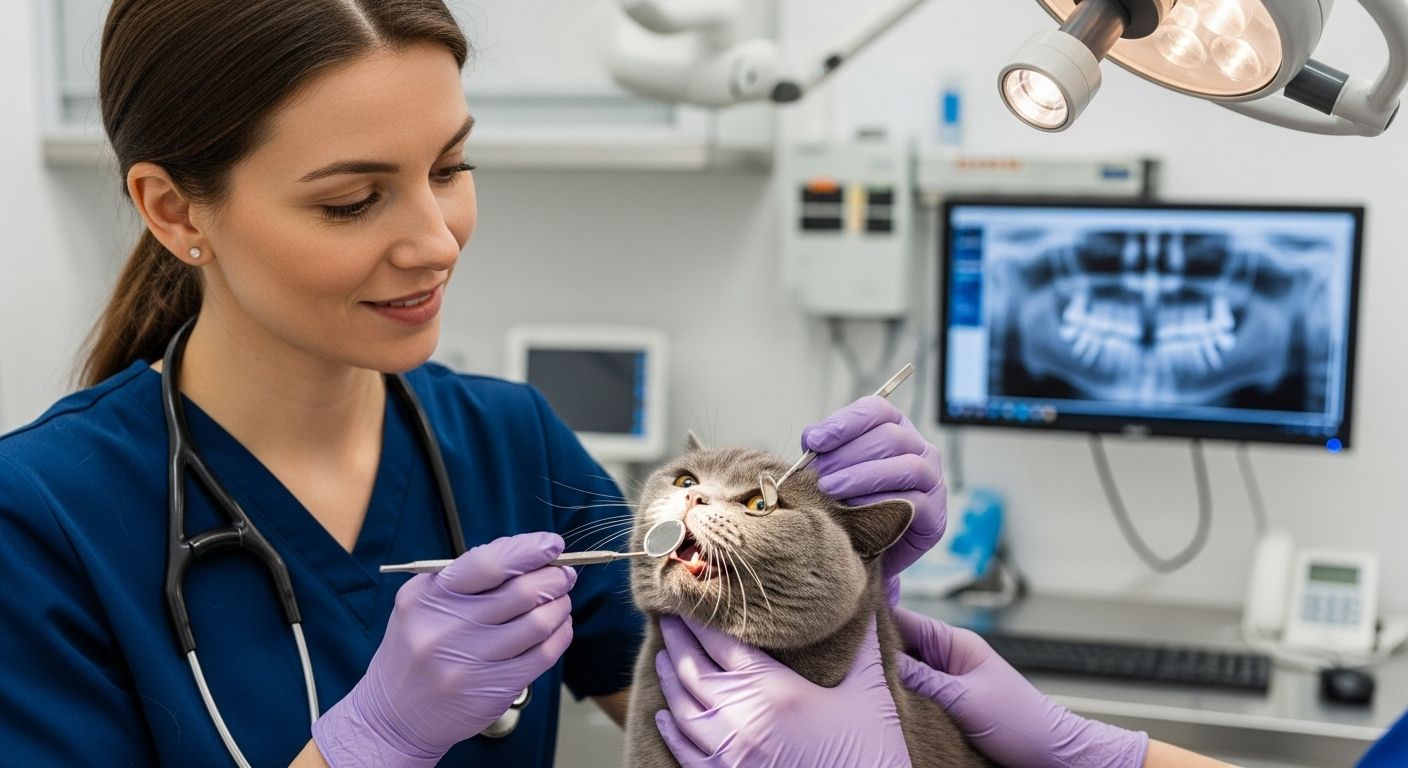
No matter how much you brush at home, most cats will eventually need a professional cleaning. Think of home care as 'brushing and flossing' and the vet visit as your '6-month dental checkup.' A professional cleaning (COHAT - Comprehensive Oral Health Assessment and Treatment) is performed under general anesthesia. This is the only way to safely clean under the gum line, where the most damaging bacteria reside.
During a professional cleaning, your vet will:
- Take Dental X-rays: 50% of feline dental disease is hidden beneath the gum line. X-rays are the only way to find resorptive lesions or abscessed roots.
- Scale and Polish: Removing all tartar and smoothing the enamel to prevent future plaque attachment.
- Assess Pocket Depth: Checking for bone loss around each tooth.
Conclusion: A Lifetime of Pain-Free Purrs
Improving your cat's dental health is one of the most significant things you can do to extend their lifespan and ensure their daily comfort. By moving slowly, choosing the right tools, and working in partnership with your veterinarian, you can turn oral care from a dramatic confrontation into a routine part of your bonding time. Start today even if it's just letting your cat taste some poultry-flavored paste. Their heart, kidneys, and 'purr-fect' smile will thank you for years to come.
Ready to Start Your Cat's Dental Journey?
Don't wait for bad breath to become a big problem. Schedule a dental checkup with your vet today and pick up a VOHC-approved treat to start the desensitization process!