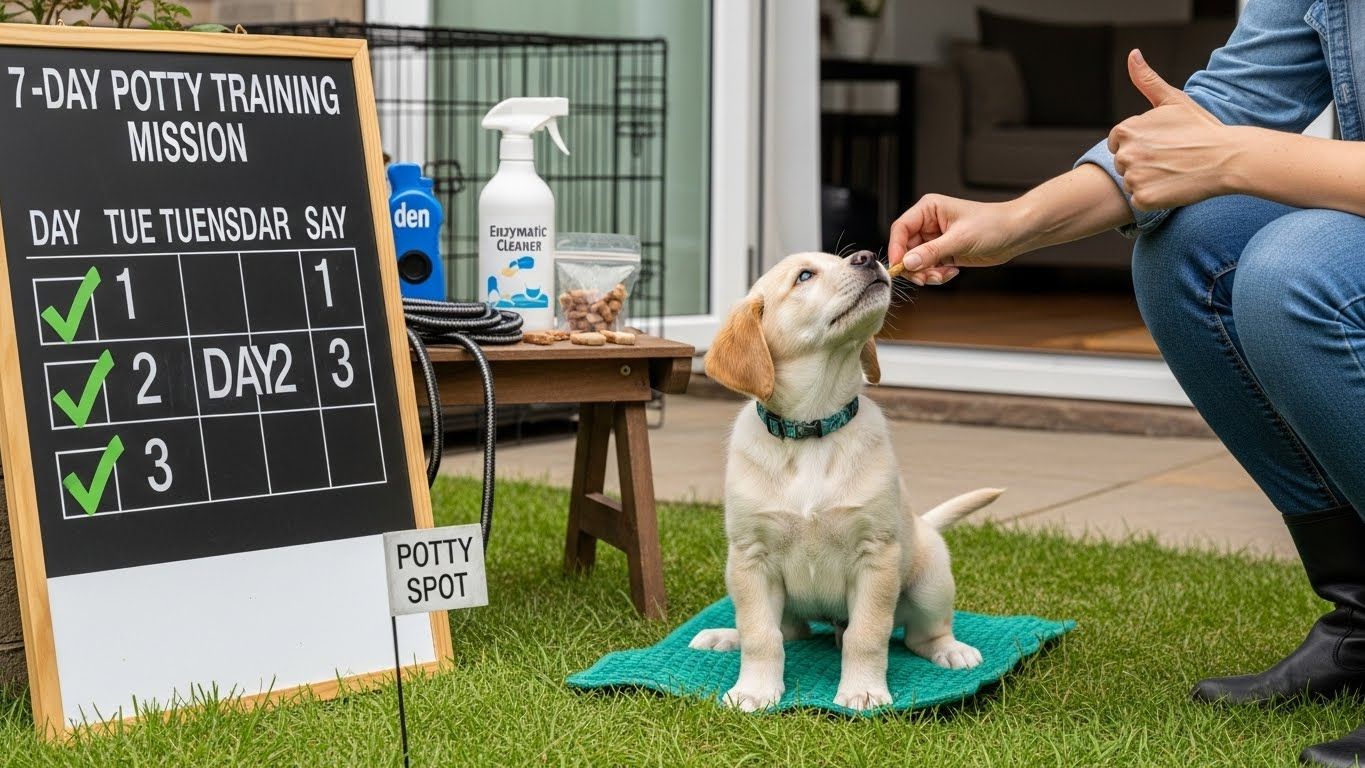
The Ultimate Guide to Potty Training a Puppy in 7 Days: A Stress-Free Framework
Admin
January 12, 2026
The Ultimate Guide to Potty Training a Puppy in 7 Days: A Stress-Free Framework
Bringing a new puppy home is an explosion of joy, puppy breath, and adorable clumsiness. However, the honeymoon phase often comes to a screeching halt the moment you step into a warm puddle on your favorite rug. Potty training is the number one challenge new dog owners face, and it is the primary source of frustration in the first few months of ownership.
The good news? It doesn't have to be a months-long ordeal involving puppy pads scattered like confetti across your living room. With a strict schedule, unwavering consistency, and a little bit of canine psychology, you can lay the foundation for a fully housebroken dog in just one week.
Is it magic? No. Is it easy? Also no. It requires dedication. But if you follow this 7-Day Potty Training Blueprint, you will trade chaos for clarity and accidents for accomplishments.
The Pre-Game Strategy: What You Need Before You Start
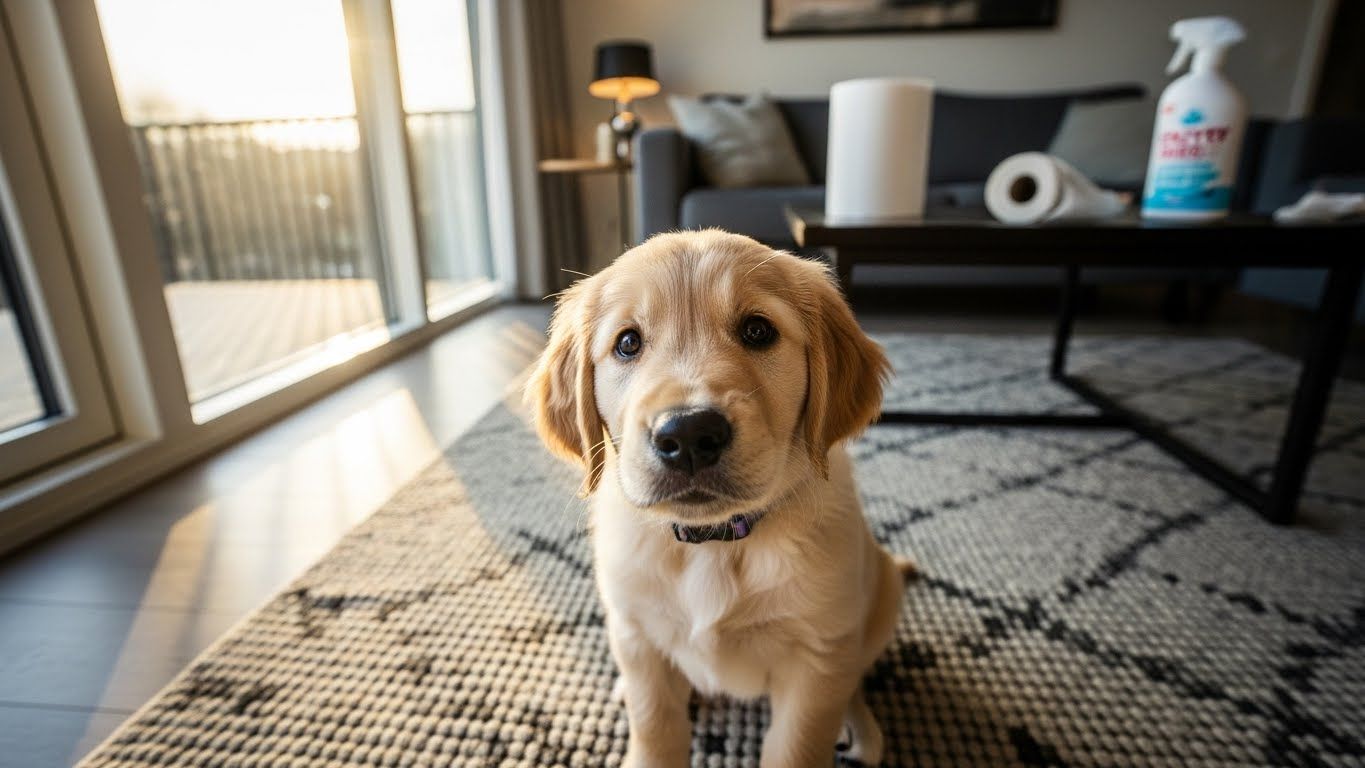
You wouldn't run a marathon without shoes, and you cannot potty train a puppy without the right tools. Many failures happen not because the dog isn't smart, but because the human wasn't prepared. Before Day 1 begins, ensure you have the following:
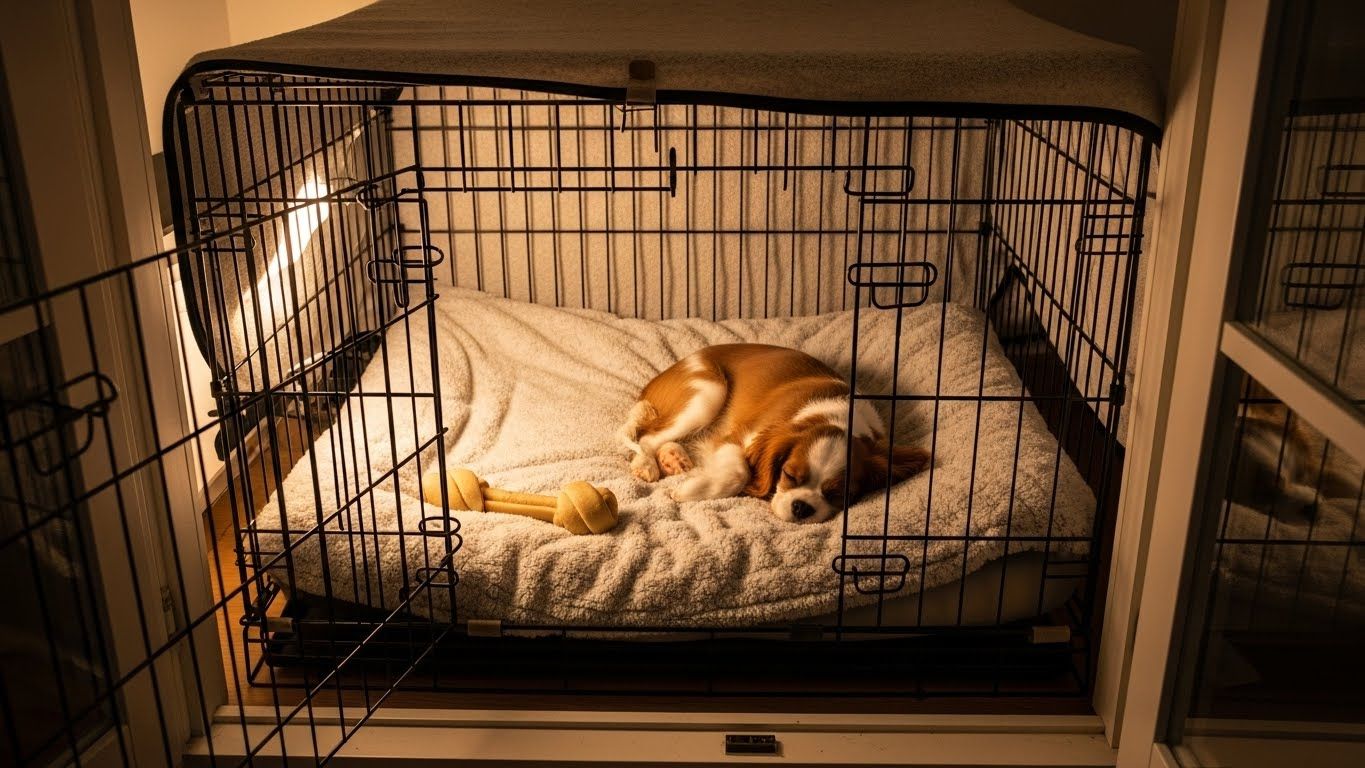
- An Appropriately Sized Crate: Dogs are den animals. They instinctively do not want to soil where they sleep. If the crate is too big, they will sleep in one corner and poop in the other. It should be just big enough to stand up, turn around, and lie down.
- High-Value Treats: Dry kibble won't cut it. You need something that smells stronger than the distraction of a squirrel. Think freeze-dried liver or tiny pieces of cheese.
- Enzymatic Cleaner: This is non-negotiable. Regular household cleaners only mask odors to the human nose. To a dog, the ammonia in bleach actually smells like urine, encouraging them to go there again. Enzymatic cleaners break down the uric acid crystals at a molecular level.
- A Designated "Potty Spot": Choose one spot in your yard. This will be the only bathroom for the next week. The scent of previous successes will trigger the urge to go.
Understanding the "Puppy Clock"
Biology dictates your schedule. A general rule of thumb is that a puppy can hold their bladder for one hour for every month of age, plus one. So, a two-month-old puppy can technically hold it for three hours—but that is while sleeping. When they are awake, playing, and drinking water, their metabolism moves much faster.
Take your puppy out: 1. Immediately after they wake up. 2. Immediately after they eat or drink. 3. Immediately after a play session.
Day 1-2: The "Umbilical Cord" Phase
The first 48 hours are about total surveillance. Your goal is to prevent accidents before they happen, rather than reacting to them. To do this, we use the "Umbilical Cord Method."
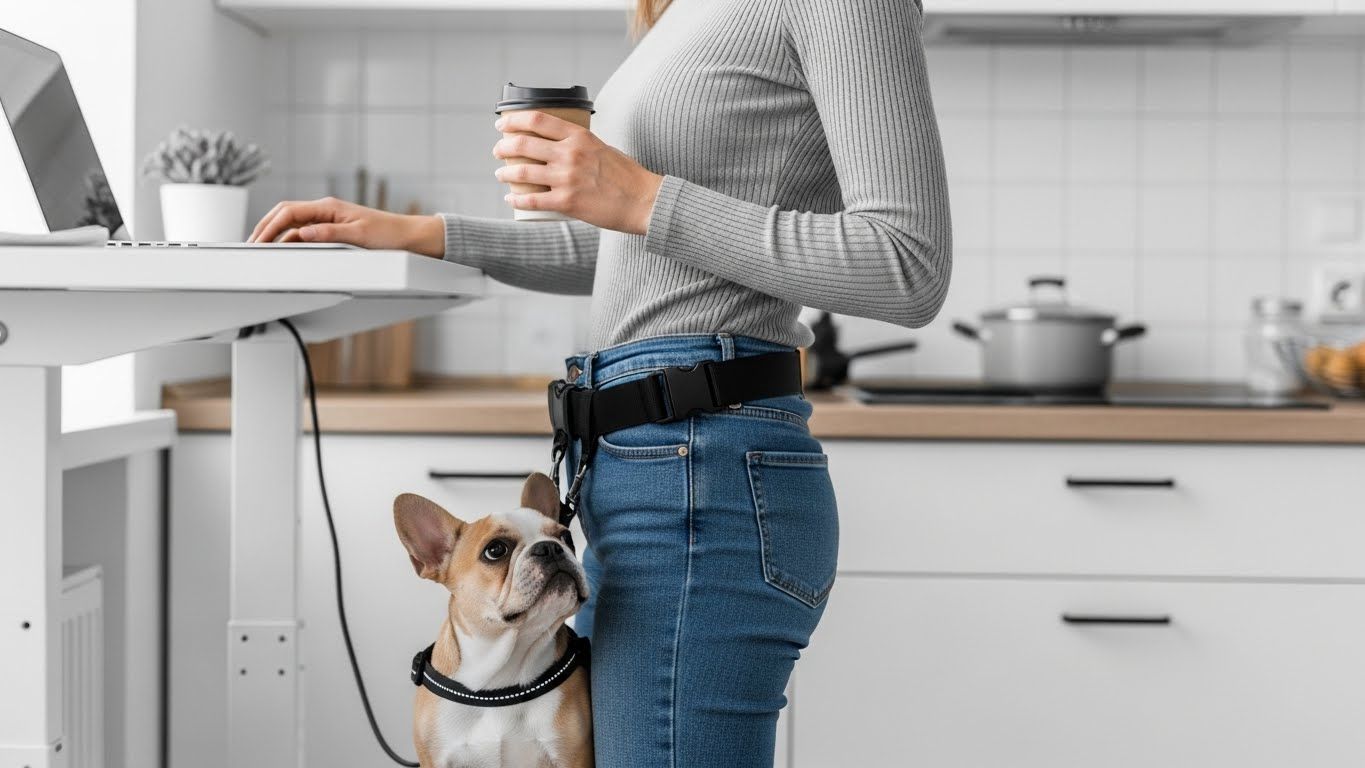
Keep your puppy on a leash, tied to your belt loop or holding it, whenever they are not in their crate. This prevents them from sneaking off behind the sofa to squat. If they are attached to you, you will notice the signs: sudden sniffing, circling, or whining.
The Schedule (Days 1-2)
- 6:00 AM: Wake up. Carry the puppy (don't let them walk) immediately to the Potty Spot. Give the command "Go Potty." When they finish, throw a party—treats, praise, excitement.
- 6:15 AM: Breakfast.
- 6:30 AM: Back to the Potty Spot. (Digestion is rapid).
- 7:00 AM - 8:30 AM: Playtime/Supervision.
- 8:30 AM: Potty Spot, then Nap in Crate.
Repeat this cycle every two hours. If you catch them mid-squat indoors, make a sharp noise (like "Ah-ah!"), scoop them up immediately, and finish the job outside.
Day 3-4: Connecting the Dots
By Day 3, your puppy is starting to realize that the grass texture under their feet is associated with relief. Now, we begin to transition from you initiating the potty break to the puppy signaling the need.
Continue the schedule, but observe closely. When you get to the Potty Spot, stop being a cheerleader during the act. Stand still. Be boring. Let the puppy sniff. The moment they squat, say your cue word ("Go Potty"). The moment they finish, then the reward happens.
Crucial Tip: Do not go back inside immediately after they pee. If you do, the puppy learns that "Peeing ends the fun outside." Instead, spend 5 minutes playing in the yard after they go. Potty first, play second.
Day 5: Expanding Freedom (The Test)
If you have had zero accidents for two days, you can loosen the leash. Allow the puppy to drag the leash around the room while you supervise (without holding it). This gives them the illusion of freedom but allows you to step on the leash quickly if they bolt for a corner.
Watch for the "Potty Dance." This involves:
- Intense sniffing of the ground.
- Walking in tight circles.
- An arched back or looking for a secluded area.
If you see this, do not wait. Clap your hands to break their focus and hustle them outside.
Day 6: Handling Regression
It is almost inevitable. You think you've cracked the code, and then you find a puddle behind the recliner. This is called regression, and it is a normal part of learning.
How you react here defines your future success.
Do not rub their nose in it. This is an archaic, cruel, and ineffective method. It teaches the dog to fear you, not to stop peeing inside. It teaches them to hide from you when they need to go.
If you find an old accident: Clean it with your enzymatic cleaner and move on. You cannot punish a dog for something they did 20 minutes ago; they lack the cognitive ability to connect the punishment to the past action.
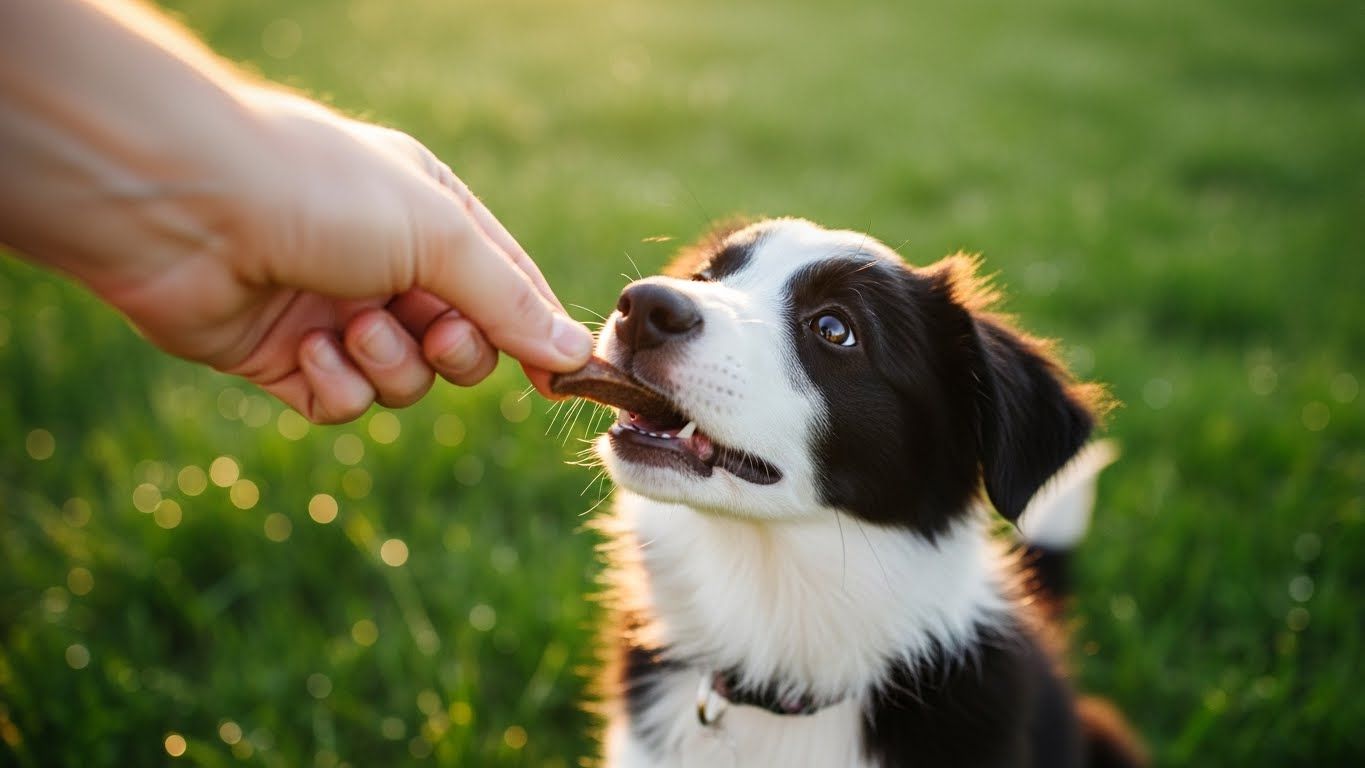
If you catch them in the act: Interrupt (startle, don't scare), move outside, reward the finish. Then, tighten the schedule back up. Regression means they had too much freedom too soon.
Day 7: The New Normal and Nighttime Training
Congratulations! You have survived the week. By now, your puppy understands the concept of "Outside is for Potty." However, bladder control is physical, not just mental. They will still need frequent breaks.
A Note on Sleep
Puppies can sleep longer than they can go awake, thanks to a hormone that slows urine production during sleep. However, at 8-10 weeks, they likely cannot go 8 hours.
- Remove water 2 hours before bedtime.
- One final potty trip right before the crate.
- Set an alarm for 3:00 AM (yes, really). Wake them up, carry them out, keep it dark and quiet, potty, and back to bed. No playing.
Conclusion: Patience is the Secret Ingredient
Seven days provides the framework, but the biology takes months to mature. Following this guide builds the habit loops necessary for a clean home. Remember, your puppy wants to please you; they just need to understand the language you are speaking.
Stay consistent. Keep the enzymatic cleaner handy. And celebrate the small victories. Before you know it, you'll be trusting your dog with the run of the house, and these sleepless nights will be nothing more than a fond, slightly exhausting memory.
Frequently Asked Questions (FAQ)
A: You can, but proceed with caution. Puppy pads can confuse dogs because you are teaching them it is okay to go inside on a soft surface (which feels a lot like your rug). If you must use them, consider a "fresh patch" of real grass on your balcony to maintain the texture association with the outdoors.
A: The outdoors is over-stimulating! They are so busy sniffing leaves and watching cars that they forget to pee. When they come inside, they are bored and relaxed, so they let it go. The solution? Stay outside longer and be incredibly boring. Do not play until the job is done.
A: Bell training is excellent. Hang a bell on the door handle. Every single time you take the puppy out, tap the bell with their nose or paw and say "Outside." Eventually, they will ring it themselves. Just be warned: smart dogs will ring the bell just because they want to go outside and chase butterflies!
A: 7 days is enough to establish the habit and the understanding. A 7-day-old training routine means your dog knows what is expected. However, full physical bladder control typically doesn't happen until 4 to 6 months of age. The "7 Days" is about training the brain, not growing the bladder.
Share this article
Comments (0)
No comments yet. Be the first to share your thoughts!