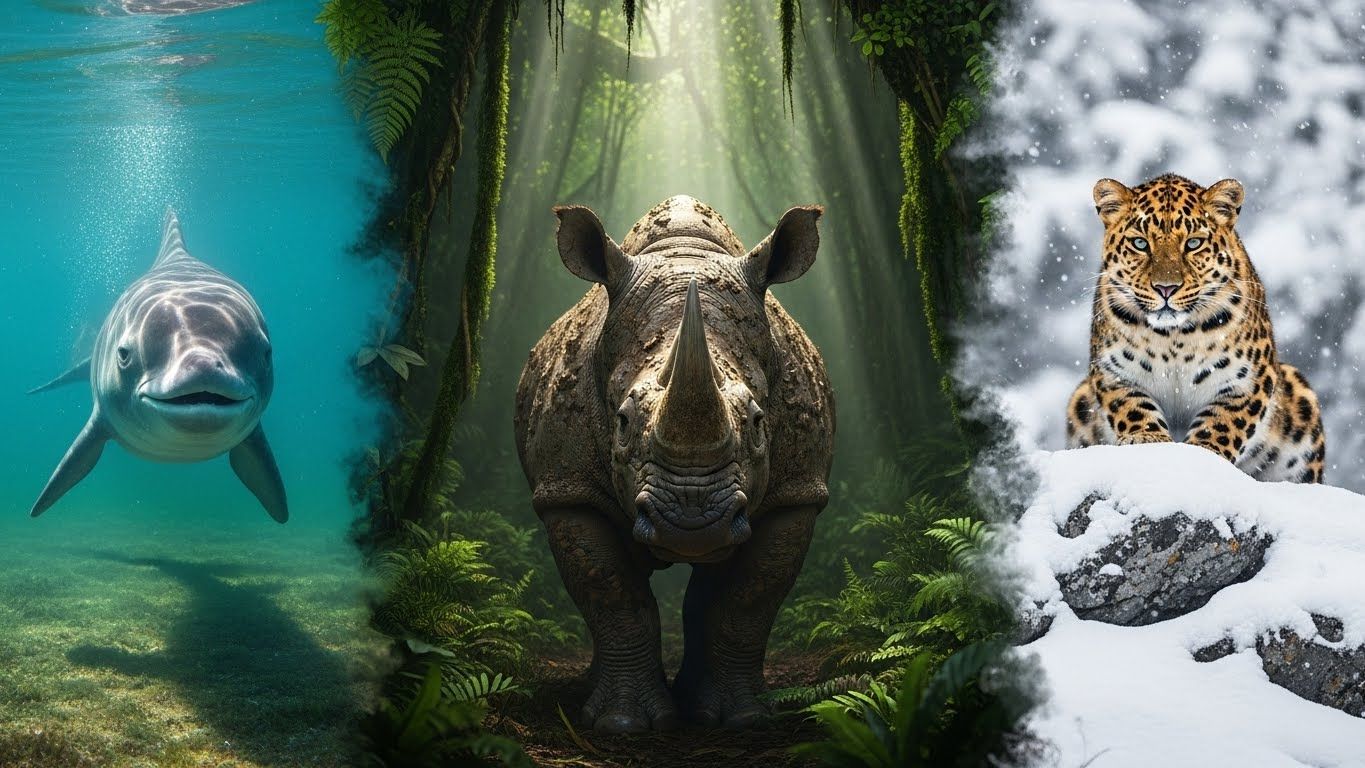
We are currently living through the sixth mass extinction event in Earth's history. Unlike previous events caused by asteroids or volcanic activity, this one is driven by human activity.
The International Union for Conservation of Nature (IUCN) Red List now classifies over 45,000 species as threatened with extinction. However, within this staggering number lies a smaller, more desperate group: the species whose populations have dwindled to double or even single digits. These animals are not just rare; they are the "living dead," ghosts in their own ecosystems, requiring immediate and massive intervention to survive another decade.
In this 2025 update, we analyze the current status of the world's top 10 most endangered species. We explore the latest population counts, the critical threats driving them toward oblivion, and the slivers of hope that remain.
1. The Vaquita (Phocoena sinus)
Status: Critically Endangered
Population Estimate (2025): 7–10 Individuals
Location: Upper Gulf of California, Mexico
The Vaquita, often called the "Panda of the Sea" due to the dark rings around its eyes, remains the world's rarest marine mammal. Tragically, its decline is entirely collateral damage. The Vaquita is not hunted for itself; it drowns in illegal gillnets set for the totoaba fish, whose swim bladder is known as "cocaine of the sea" on the Chinese black market.
In late 2025, a joint monitoring effort by the Mexican government and the Sea Shepherd Conservation Society offered a glimmer of desperate hope. Acoustic monitoring and visual surveys estimated between 7 and 10 individuals remaining, including at least one calf. While this suggests the population has stabilized slightly compared to the freefall of previous years, the genetic pool is terrifyingly small.
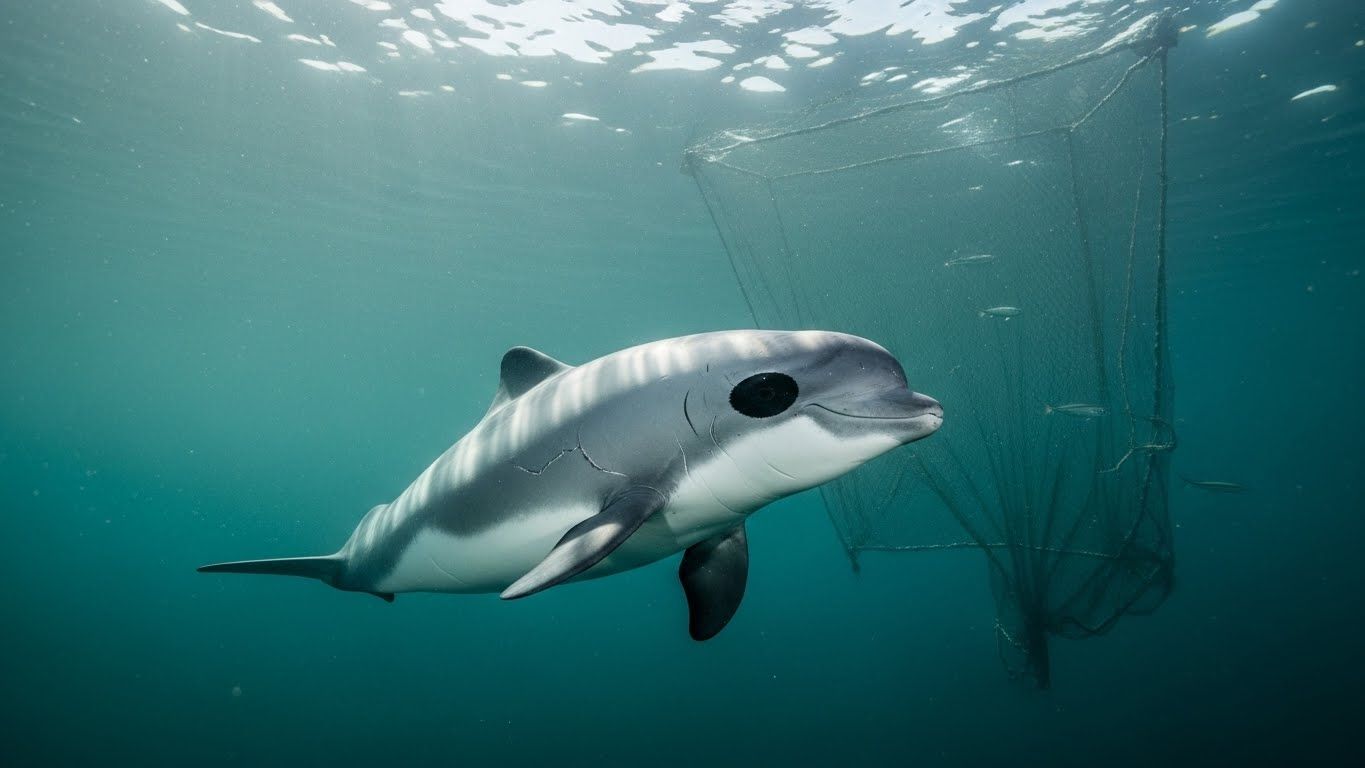
The Outlook: The survival of the Vaquita hangs on the total enforcement of the "Zero Tolerance Area" (ZTA) in the Gulf. The introduction of concrete blocks with hooks to snag illegal nets has helped, but the pressure from cartels trafficking totoaba remains immense.
2. Javan Rhino (Rhinoceros sondaicus)
Status: Critically Endangered
Population Estimate (2025): ~50 Individuals
Location: Ujung Kulon National Park, Indonesia
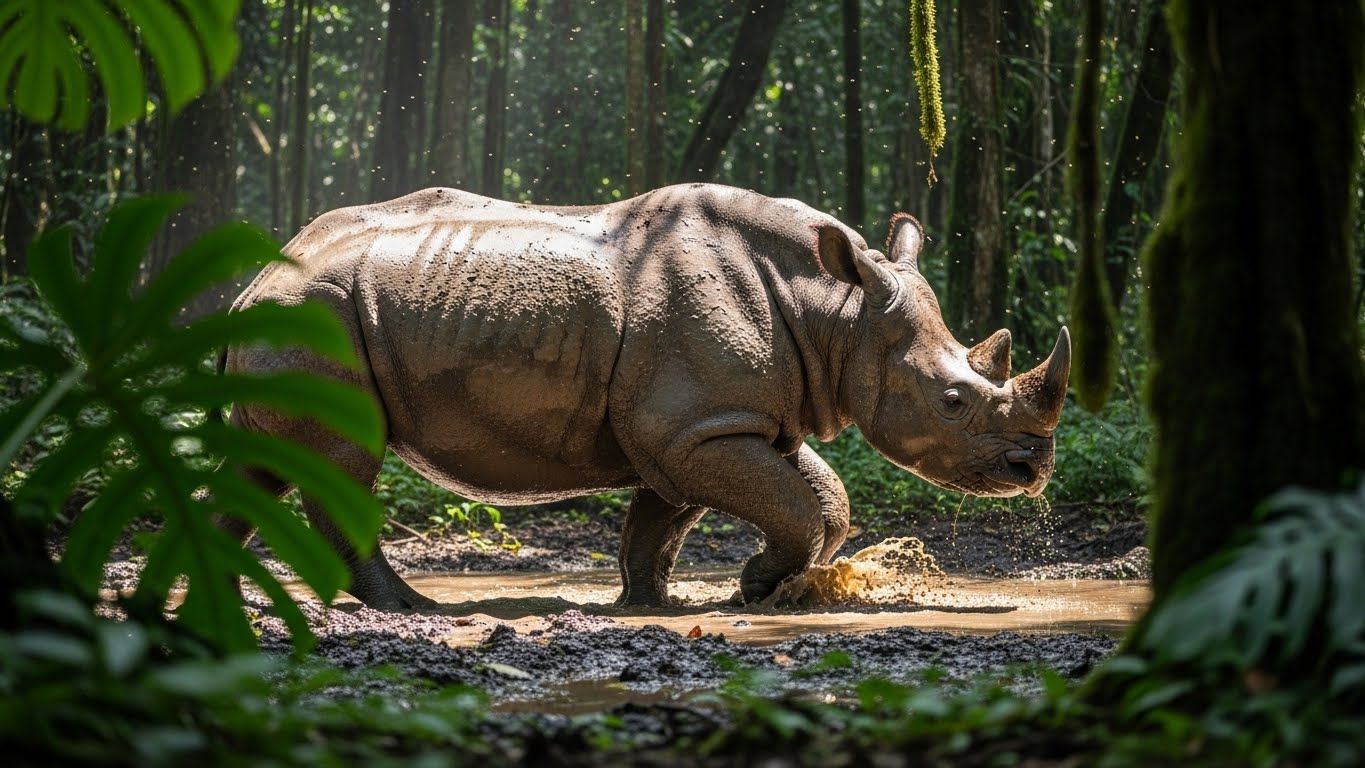
Once roaming across Southeast Asia, the Javan Rhino is now confined to a single national park on the western tip of Java. Known for their loose folds of skin that resemble armor plating, these solitary giants are facing a renewed crisis.
For years, the population was thought to be stable at around 76 individuals. However, a devastating revelation in 2024 and confirmed in 2025 reports showed that poaching gangs had infiltrated the park, killing up to 26 rhinos undetected. This loss represents nearly a third of the entire species. The remaining population of approximately 50 individuals is now under armed guard, but the threat of tsunamis (the park sits in the shadow of the Anak Krakatau volcano) and disease from domestic cattle remains an existential risk.
3. Northern White Rhino (Ceratotherium simum cottoni)
Status: Functionally Extinct
Population: 2 (Both Female)
Location: Ol Pejeta Conservancy, Kenya
Najin and Fatu are the last two Northern White Rhinos on Earth. Both are female, making natural reproduction impossible. The male, Sudan, died in 2018. They live under 24-hour armed guard in Kenya.
However, science has not given up. The BioRescue project has successfully created embryos using eggs harvested from Fatu and sperm preserved from deceased males. As of 2025, the team is preparing for the first embryo transfer into a Southern White Rhino surrogate mother. If successful, this would be the first time a mammal species has been "resurrected" from functional extinction using IVF technology.
4. Amur Leopard (Panthera pardus orientalis)
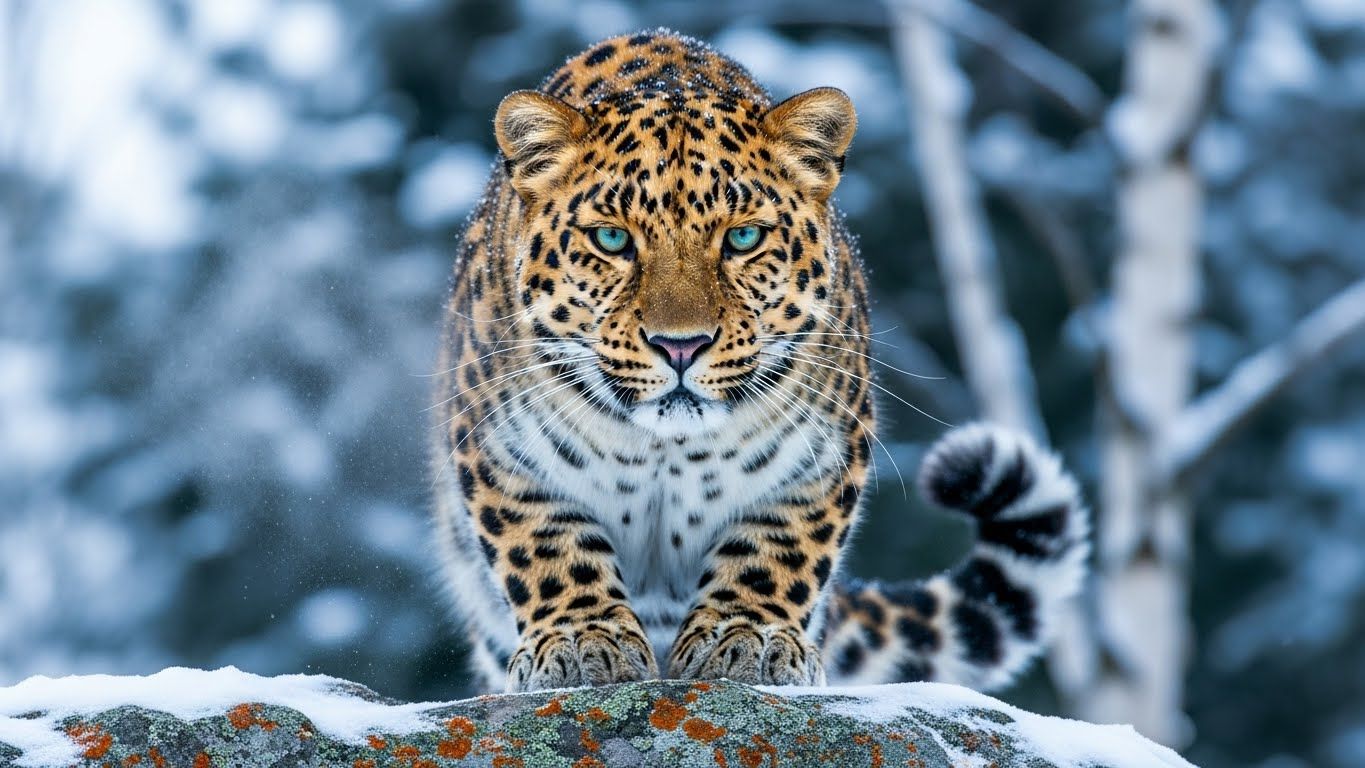
In the snowy forests of the Russian Far East and northeastern China, the Amur leopard clings to existence. It is the only leopard subspecies adapted to a cold climate.
There is good news here. Thanks to the creation of the "Land of the Leopard" National Park in Russia, the population has slowly climbed from around 30 individuals in the early 2000s to an estimated 100+ in 2025. Recent camera trap data from 2025 shows a record density of 1.86 leopards per 100 square kilometers. While still critically endangered and suffering from low genetic diversity, the Amur leopard proves that rigorous conservation and anti-poaching measures can reverse a downward spiral.
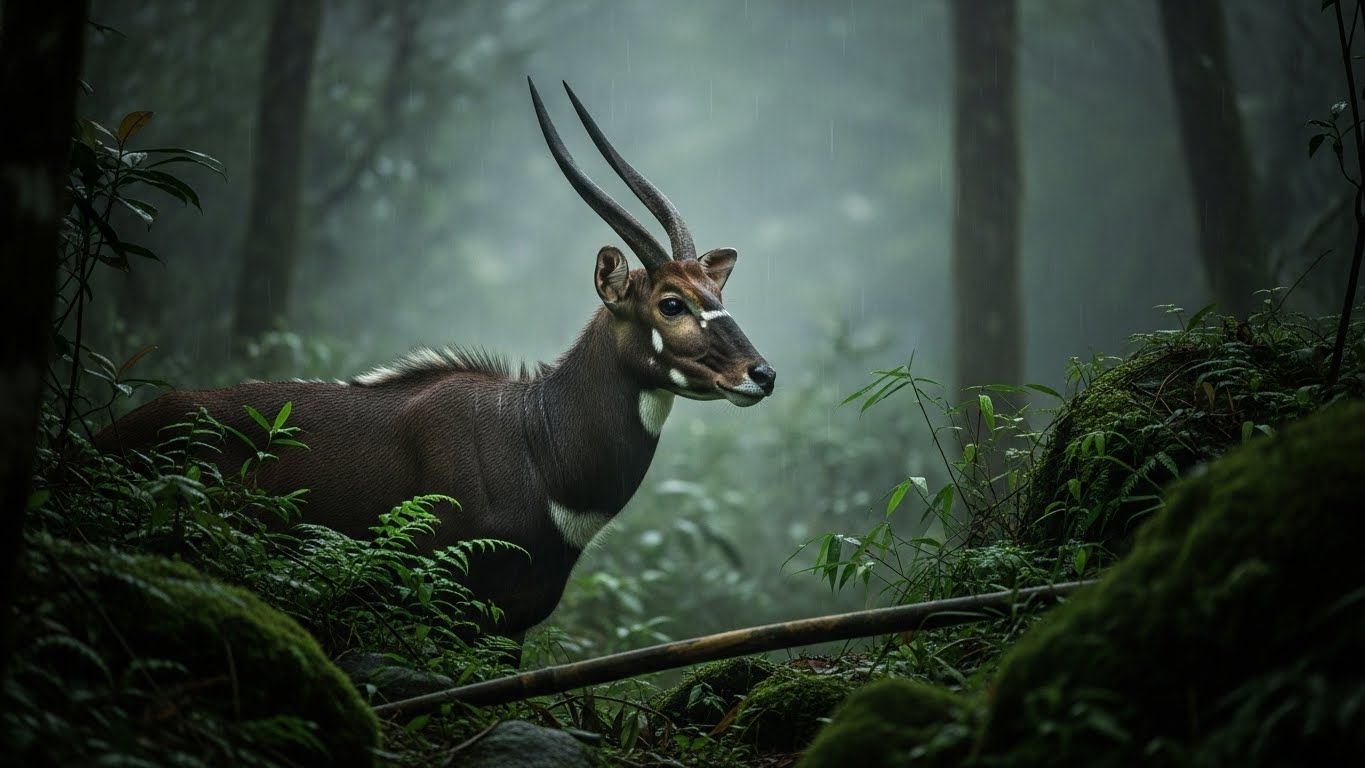
5. Saola (Pseudoryx nghetinhensis)
Often called the "Asian Unicorn," the Saola is one of the world's most mysterious mammals. Discovered only in 1992 in the Annamite Mountains of Vietnam and Laos, it has rarely been seen alive in the wild and has never survived in captivity.
No formal population survey exists because the animal is so elusive, but experts estimate fewer than 100—and possibly as few as 20—remain. The primary threat is not direct hunting, but indiscriminate wire snares set for other bushmeat species. The Saola is a tragic victim of the "empty forest" syndrome, where habitats remain intact but are stripped of wildlife by industrial-scale snaring.
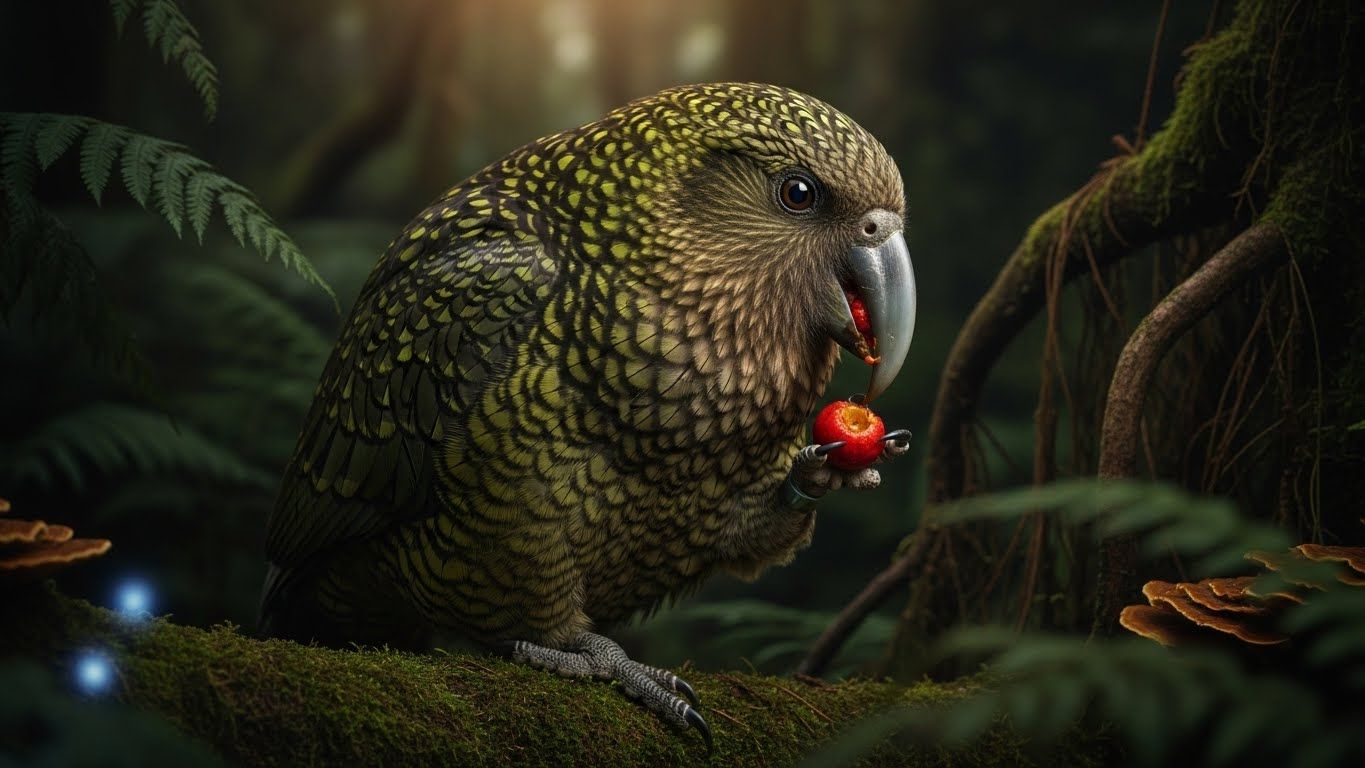
6. Kakapo (Strigops habroptila)
Status: Critically Endangered
Population (2025): ~240 Individuals
Location: Predator-free islands, New Zealand
The Kakapo is a bird of paradoxes: it is a parrot, but it cannot fly; it is nocturnal; and it smells like honey and flowers. Native to New Zealand, it was decimated by introduced predators like stoats and rats.
2025 has been a year of celebration for Kakapo recovery. The species only breeds when the native Rimu trees fruit heavily (a "mast" year), which happens every 2-4 years. 2025 was a massive mast year, leading to a "bumper breeding season." The population, which dipped to 51 in 1995, now sits comfortably above 240. Every single living Kakapo has a name and is genetically mapped, making their recovery one of the most intensively managed conservation projects in history.
7. Sumatran Rhino (Dicerorhinus sumatrensis)
The smallest and hairiest of the rhino species, the Sumatran Rhino is in a catastrophic state. Fewer than 50 individuals remain in fragmented pockets of Sumatra and Indonesian Borneo.
Unlike the Javan rhino, which is concentrated in one spot, the Sumatran rhino suffers from isolation. Individuals are so scattered that they rarely meet to breed, leading to females developing reproductive pathologies. The Indonesian government has launched an emergency "capture and consolidate" plan to bring wild rhinos into sanctuaries for breeding, but the process is slow and risky.
8. Sunda Island Tiger (Panthera tigris sondaica)
Commonly known as the Sumatran Tiger, this is the last surviving tiger population in Indonesia (the Balinese and Javan tigers are long extinct). With fewer than 600 individuals remaining, they face the twin threats of poaching for traditional medicine and habitat destruction for palm oil plantations.
9. Yangtze Finless Porpoise (Neophocaena asiaeorientalis)
In the murky waters of China's Yangtze River, the "Smiling Angel" is fighting to avoid the fate of the Baiji dolphin, which was declared extinct in 2006. Pollution, overfishing, and heavy shipping traffic have decimated the population. However, recent bans on fishing in the Yangtze have helped numbers stabilize around 1,000 to 1,200, making it a rare example of government policy having a rapid positive effect.
10. Tapanuli Orangutan (Pongo tapanuliensis)
Only identified as a distinct species in 2017, the Tapanuli Orangutan became the most endangered great ape on Earth overnight. With fewer than 800 individuals living in the Batang Toru ecosystem of Sumatra, their tiny habitat is threatened by a proposed hydroelectric dam and a gold mine. Losing this small area would mean the extinction of an entire species of Great Ape.
Why Does It Matter?
It is easy to view these animals as statistics. But each species represents millions of years of evolutionary history. When the Javan Rhino stomps through the forest, it disperses seeds that maintain the rainforest structure. When the sea otters or sharks disappear (keystone species), entire marine ecosystems collapse.
Conservation is not just about charity; it is about self-preservation. The biodiversity that supports these animals also purifies the air we breathe and the water we drink.